

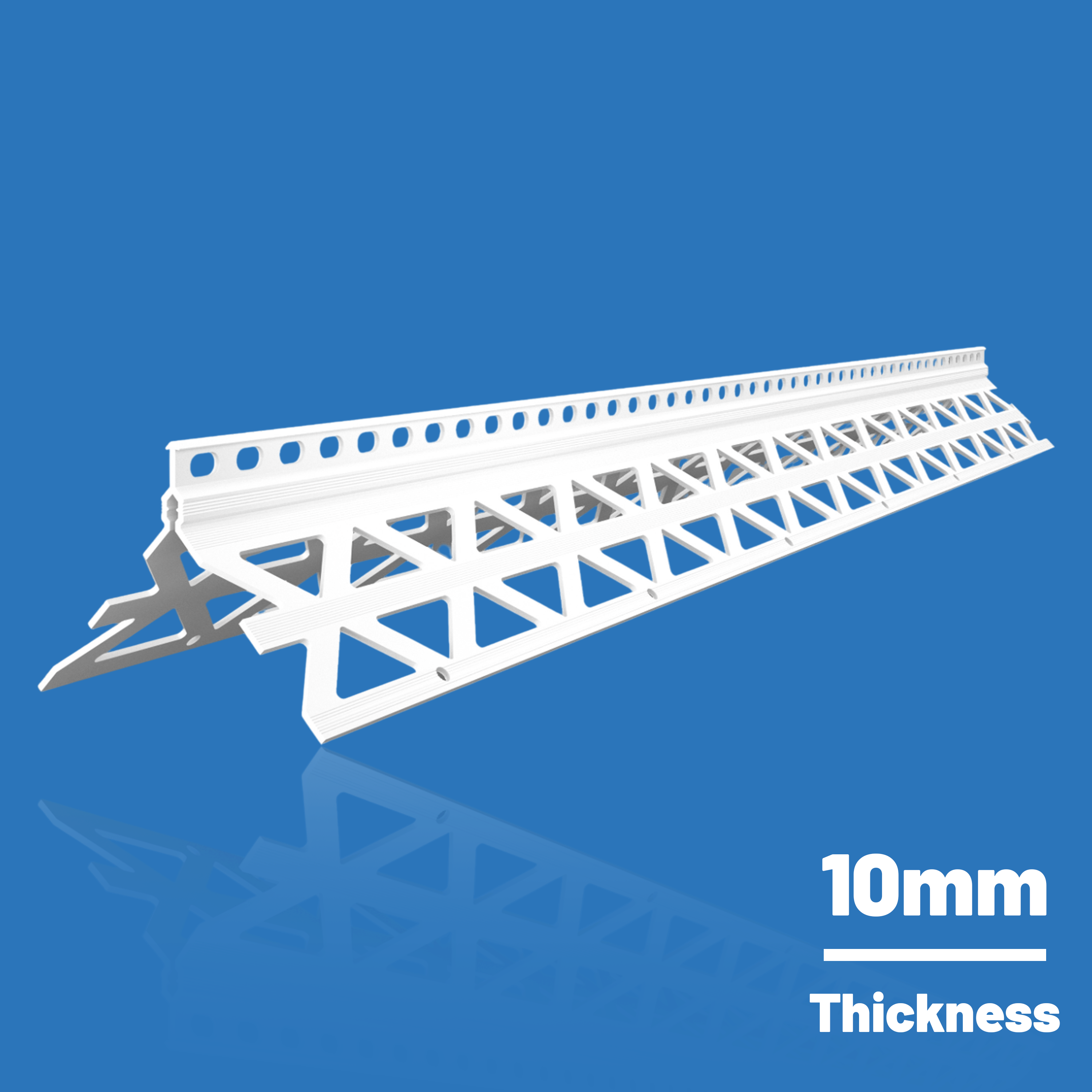
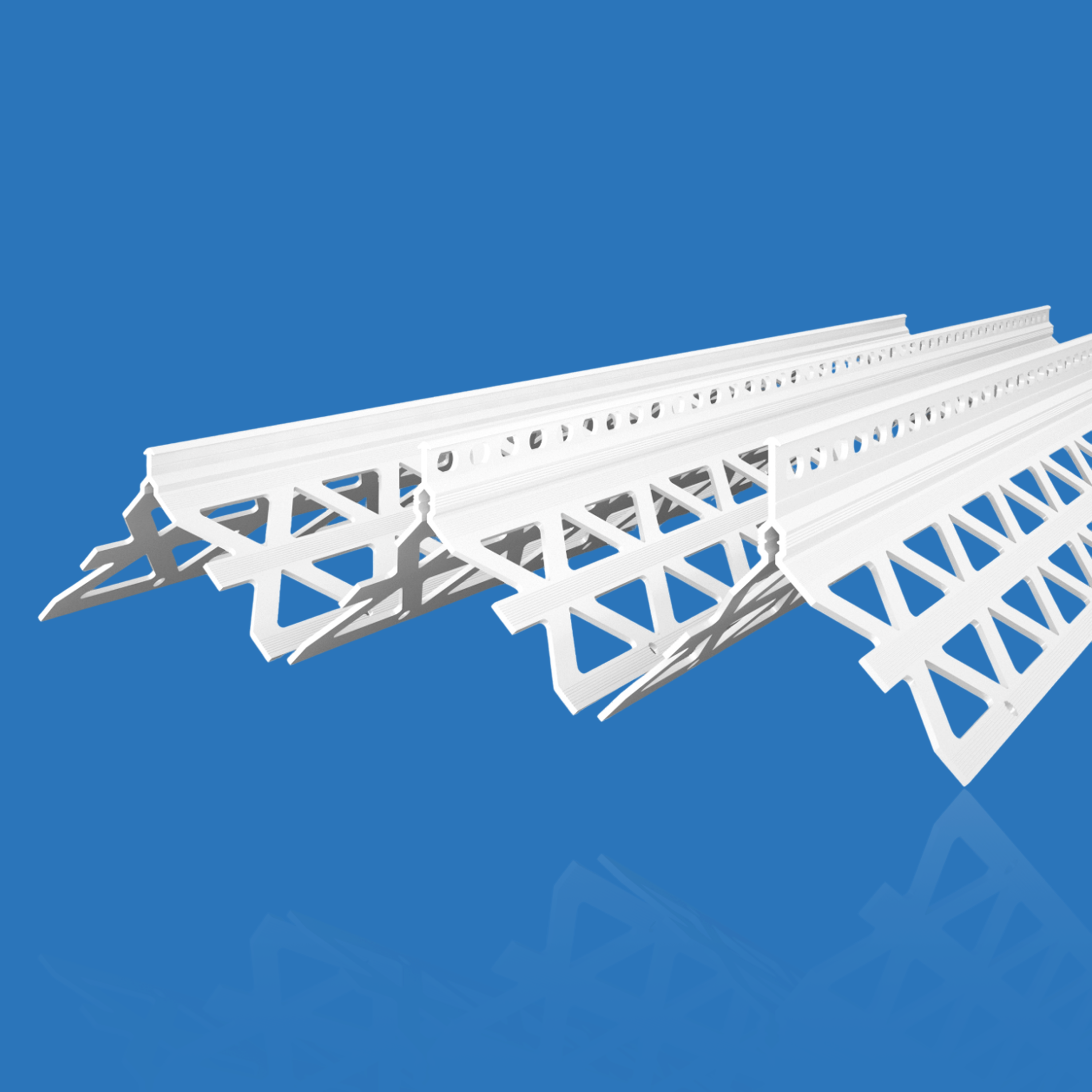
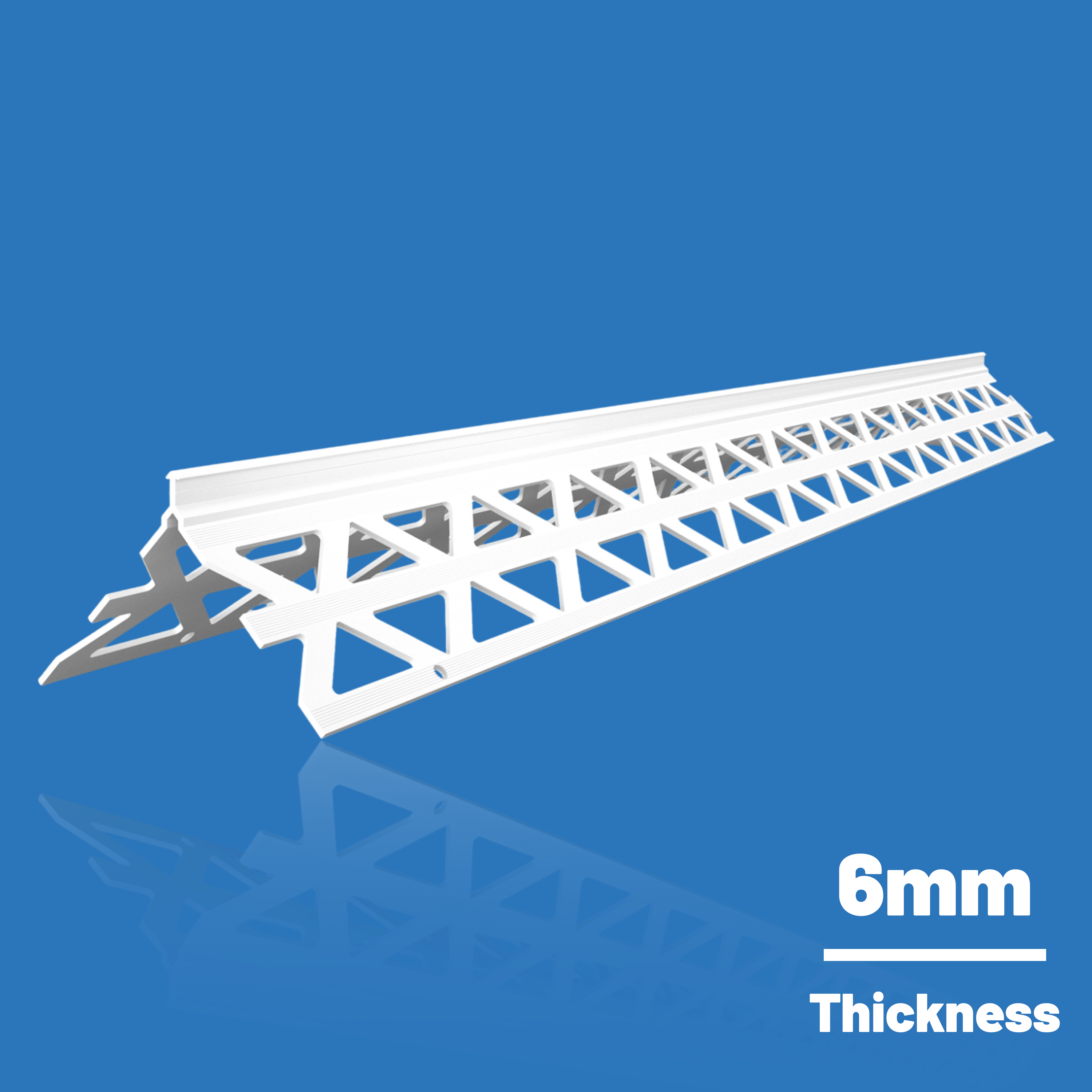
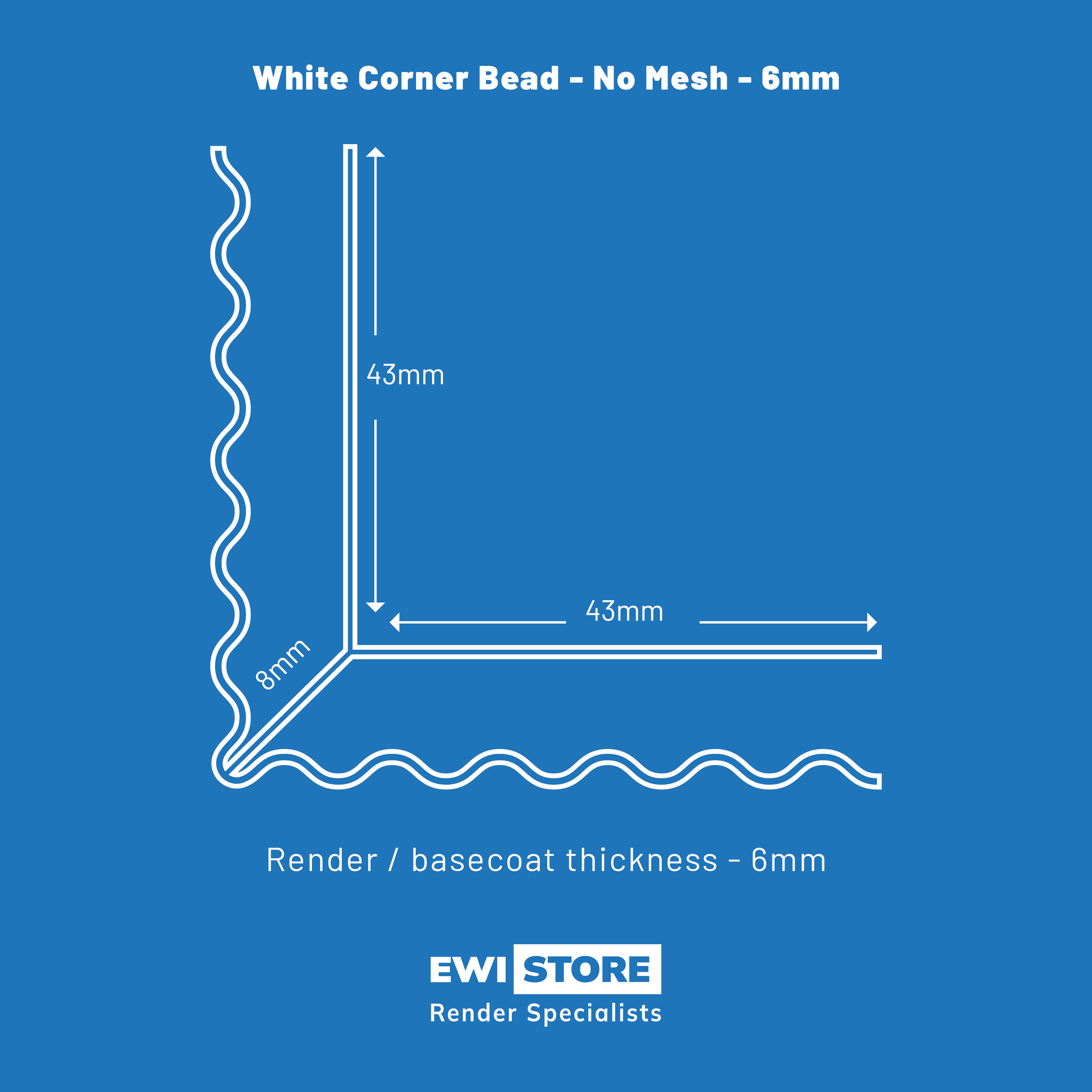
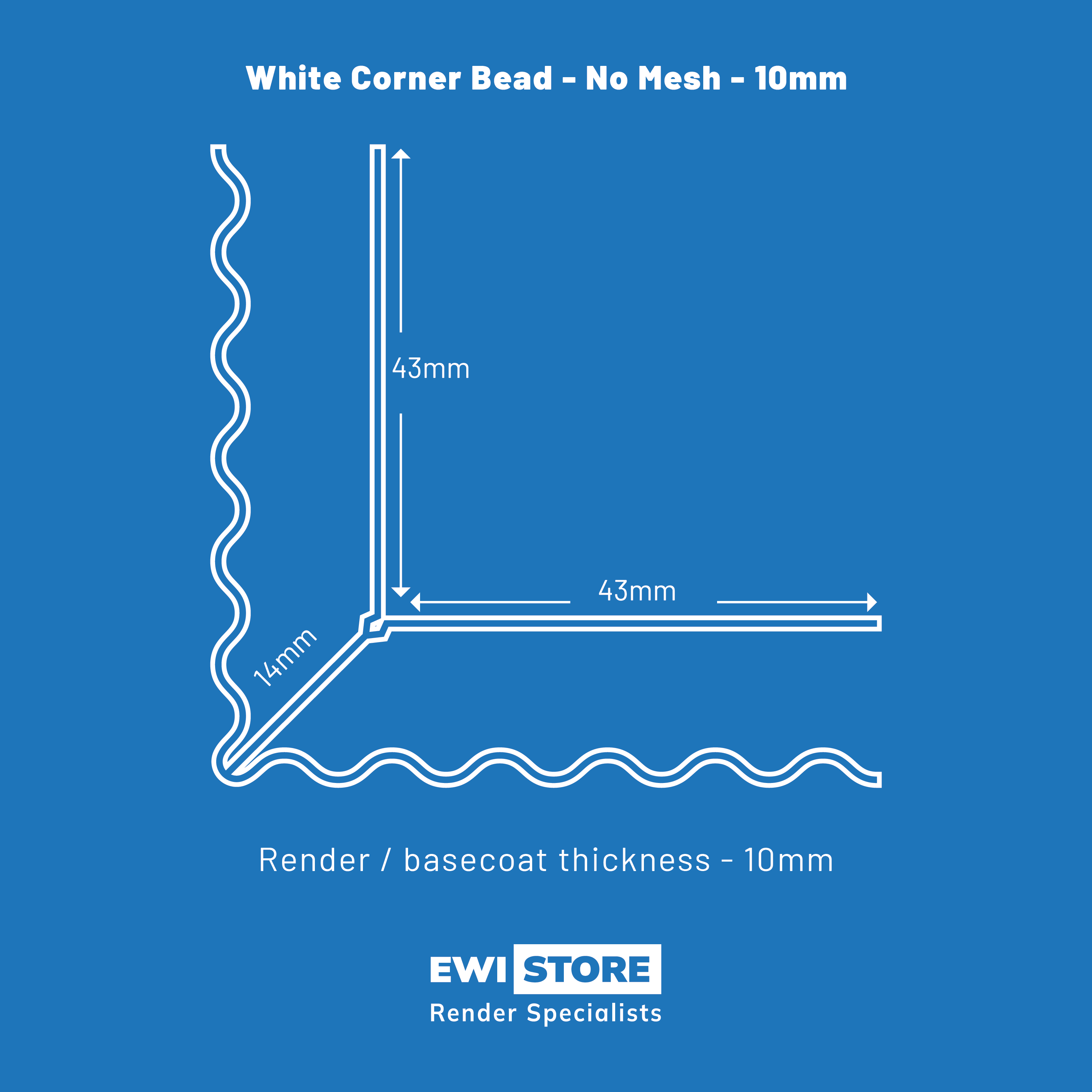
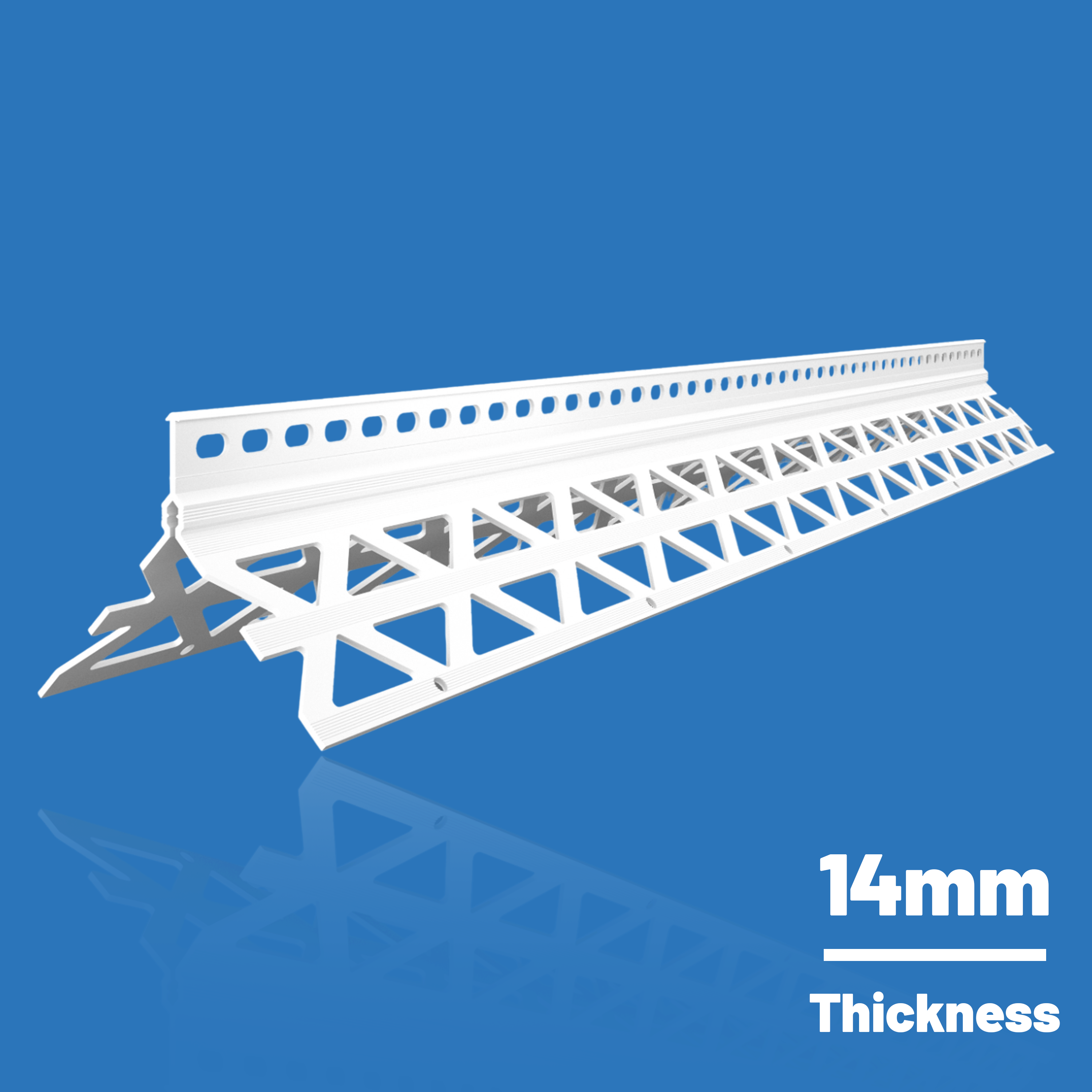
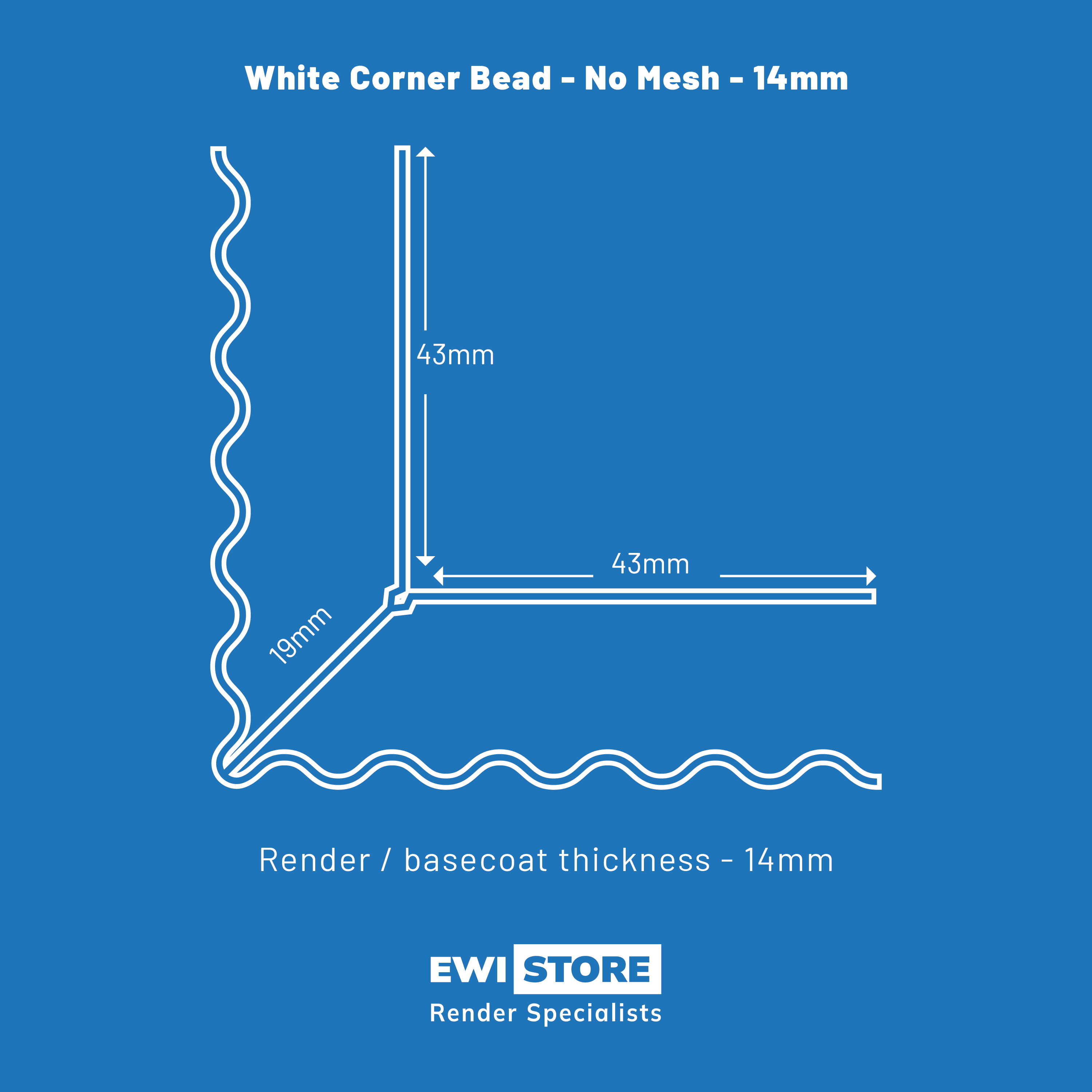
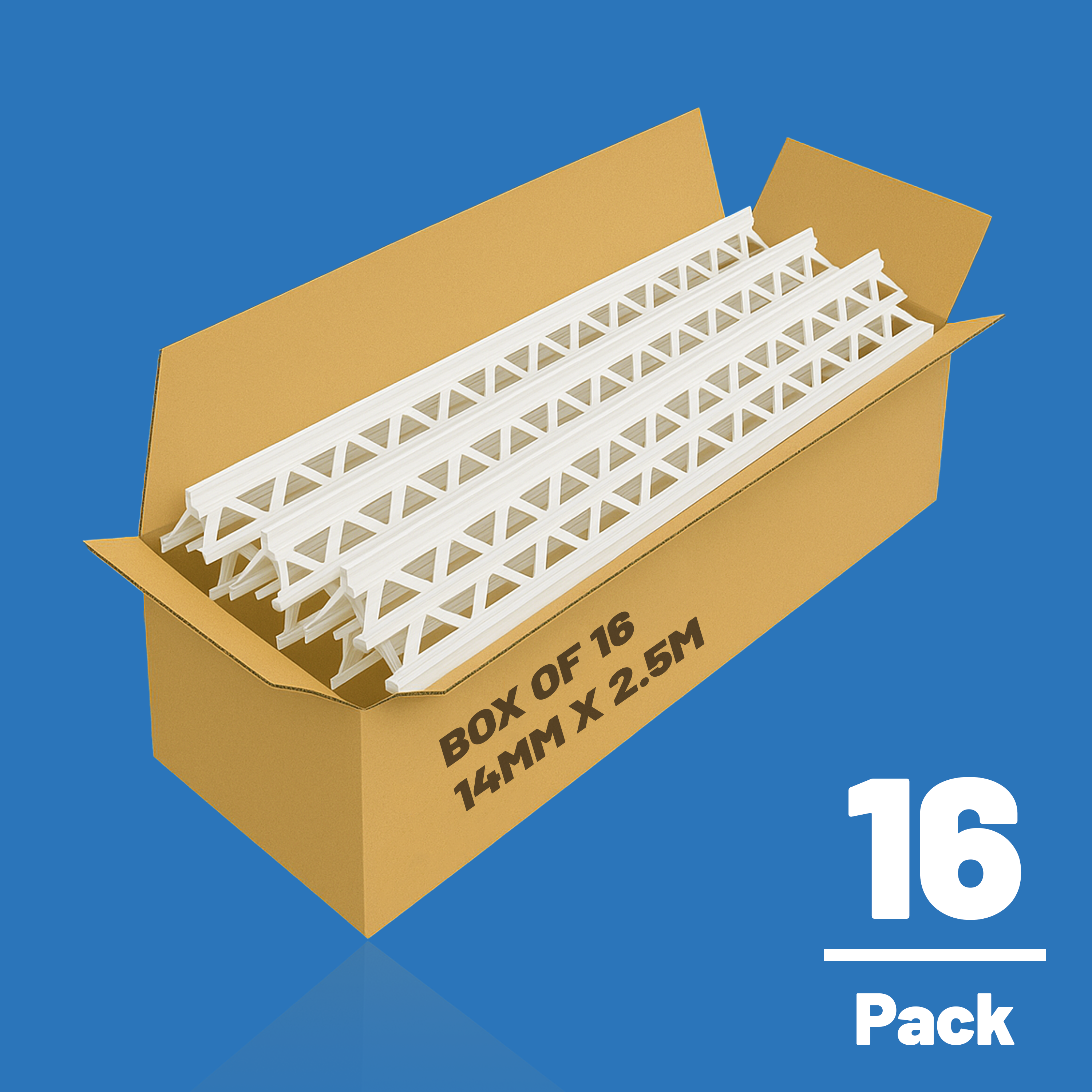


White Corner Bead - No Mesh - 10mm - Single Bead
Minimum Order Quantity: This product has a minimum online order quantity of 10 units. For smaller quantities, please call us on 020 3397 4067 or start a webchat with our team.
£4.07
Incl. VAT
£4.07
Incl. VAT (regular price)
Please note: This product has a slightly longer lead time. Our team will notify you with an estimated delivery date.

Reviews & Ratings
jason
20.09.2025
Amazing! Perfect fit and rigid PVC. 14mm render sorted.
Charlotte
29.08.2025
Strong bead, real good value.
Tom
27.08.2025
Right stiff kit this, cuts bang on for custom angles. Brilliant!
Abijay
07.08.2025
Proper good saves tine.
Tomasz
07.08.2025
Proper stiff PVC. Dead square on the reveal for 14mm render. oSrted. Next morning delivery helped massively.
Katherine
22.07.2025
dead straight 14mm.
Paolo
10.07.2025
14mm depth bang on, deceny kit. Just a minor faff getting the final skim crisp on the nose.
Gary
04.06.2025
Perfect 14mm fit, meant the render skim was spot on. This PVC bead is proper solid, zero wobble. Made squaring the corners effortless. Saved loads of time. Fantastic value.
Craig
12.05.2025
CON ARTISTS! was short lengths so job stopped AND the plastic cracked immediateley! Paying £3 a pop for this NAFF quality is a JOKE.
Havian
07.04.2025
Brill. Best 14mm bead I've used. Saves so much time getting the corners perfect. Chucking in a bulk order now.
Aaron
05.04.2025
Proper rigid bead. 14mm render looked sweet and square.
james
28.03.2025
Proper stuff for externals. The 14mm size is mint and kept the corner dead true on the reveal, exactly where I needed it to stkop the cracking. Yea, might cost me slightly more a stick than buying wholesale, but for the job this done, it's worth the price for the guarantee it works.
Nick
23.03.2025
Perfect 14mm bead so sturd.
Brian
22.02.2025
Sound bead, holds the skim true. But 3m lengths would save time on big jobs.
Deimante
12.02.2025
Proper straight kit.
Lucian
28.10.2024
Exactly the rigid 14mm spec I needed. Proper quality.
Ryan
23.09.2024
Brill! Good quality, proper rigid gear.
Mateusz
29.08.2024
Brill! Proper rigid stuff, unlike that cheaper nonsense. Went up easy and gave dead straight corners every time. Bang on value!
David
28.08.2024
This 14mm No-Mesh bead is proper job! Perfect fit.
Iqbal
09.08.2024
Sound PVC bead. Proper straight profile and ideal for 14mm thin coat. Felt bit expensive, plus they only sold it in packs of five.
Jim
19.06.2024
Proper PVC. Used these for 14mm render and the finish is dead straight. Delivered fast which saved the job.
Christopher
23.05.2024
could be better. This PVC is too wobbly and fiddy. Needs too much faff to stay dead straight, previous metal beads were much easyer.
Gintaras
03.05.2024
Top quality kit, made corners bob on. Easy to cut.
alexey
11.04.2024
Proper job. Rigid and holds its shape.
Sabrina
08.04.2024
Perfect fit!
GRANT
04.04.2024
Decent kit, proper rigid. Made the 90s perfectly straight. Good to find this without the useless mesh!
Domas
05.02.2024
Brilliant PVC quality. Holds the 90 degree perfect for 14mm render. Zero warping. Spot on!
Paul
02.02.2024
Gave a perfectly smooth edge. 14mm line is proper sharp, top kit.
Paul
29.01.2024
Proper rigid stuff won't bend like some cheap rubbish. Fast delivery was key. Got the corners absolutley perfect. Good quality.
Daniel
05.01.2024
Mate, this PVC bead is proper stiff, not flimsy like some brands. Got my corner bang on, zero rust issues later. Good value too.
Kulwinder
05.01.2024
Best I've used. Doesn't twist like the others proper rigid PVC perfect for 14mm screed. Mint.
Scott
19.11.2023
Brill! Finally found rigid, no-mesh PVC that is dead straight. Top price too, spot on.
keith
17.11.2023
sound stuff. Held perfectly straight on rough walls.
Charles
09.11.2023
Brill bit of kit. Really rigid PVC. Corners are dead straight, easy job done, brilliant value.
hassan
27.10.2023
Rigid PVC was dead square. Needed the no mesh type and EWI had it. Sorted 14mm job quick.
Muneeb
23.10.2023
Dead straight. PVC cut simple with a knife. Sorted.
Harman
13.10.2023
Cracking stuff. Fits perfect for 14 mil.
JIM
12.08.2023
Top-notch! Dead straight angle. Sorted the finish.
Peter
04.08.2023
Mint bead. The rigid PVC keeps the corner spot-on for the 14mm, way superior to the cheap stuff and cleaner than old metal beads.
Anne-Marie
02.08.2023
Spot on!
Rana
15.07.2023
mint beac! Perfect for my 14mm application. Doesn't warp just cuts straight and looks professional.
john
27.06.2023
spof on!
matt
11.06.2023
Dead straight. Bang on for 14mm render. PVC is sturdy, no messin' about with mesh wings. Quality stuff.
Stevan
30.04.2023
14mm bead is absolutely perfect for the job. Super durable material, achieved a beautiful straight line easy. Great value too. Will buy again.
Dean
25.04.2023
Decent bead. Rigid PVC. Had one scuff mark.
Andrew
10.03.2023
it workd fine for the angle but the 2.5 metre length was consistently 5mm short; really fidly.
Carla
27.01.2023
Good gear. Proper straight corners, PVC rigid, delivery fast, jobs a goodun.
Preslav
03.01.2023
Spot on. Best I've used for 14mm render.
Mark
27.11.2022
Proper thick bead, disn't warp. Fit the 14mm depth straight as a die. Saved me hassle and time, cheers EWI.
Janusz
09.11.2022
Satys straight. Needed that 14mm fit.
David
07.11.2022
spot on for 14 mil render. Looks mint.
Andrew
04.11.2022
Totla waste of dosh. Laid extra for expedited delivery just for the bloke to turn up late with a pile of bent plastic. Flimsy bead too not square. Might be oay for a thin skim job but this is rubbish for 14mm render. Proper pain in the backside.
Mark
18.10.2022
Worth every penny! Fit the 14mm bead size bang on. Proper solid plastic too, my corners are dead straight. Sorted.
LEE
08.10.2022
Smooth to fix, corners are spot on. Sound.
Mayur
13.09.2022
Proper job. 14mm bead sorted the bad wall.
Tony
09.09.2022
Quality rigid plastic means perfectly straight lines. Avoids rust saves time. Defo worth the price.
Paul
10.08.2022
Top stuff. Deos the 14mm job perfect. Proper rigid.
David
02.08.2022
Rigid PVC is brill. Dead straight corners on the 14mm render. Sorted!
Edward
31.07.2022
Proper rigid PVC. Gives a lovely sharp corner for 14mm render. Brill!
Eamonn
31.07.2022
Proper straight edges, every time. Rigid PVC holds the line perfechly. Cracking value too.
Andrew
27.07.2022
Good functional bead, but not the most rigid. Used these for some 14mm window reveals and wall corners. Straightness was bang on for the most part, and it took the monocouche fine—got a good square finish. Fair enough for the price. They are definitely less rigid than other branded PVC or Ali beads though, so needed careful alignment and stronger fixings to keep that plumb line steady against accidental knocks. Found a few pieces with minor burrs needing trimming, and one length was short of the advertised 2.5m which is always a bit annoying on site. Still did the job in the end, 4 stars.
Andrew
22.07.2022
Dead straight line. Top tier kit for 14mm.
joe
12.07.2022
Brill. Perfect finish.
Richard
12.07.2022
Dead easy to fit for the 14mm render, quality PVC holds the edge solid. Proper straight. Sound gear, will re-buy.
Alenka
10.07.2022
Proper job this bead. Sturdy, no warp.
James
07.07.2022
brill kit this. The 14mm gauge was bang on, made the window reveals perfect. Really rigid PVC too, far better than the cheap alternatives. Sorted.
WIOLETTA
04.06.2022
Way better than faffing woith mesh. Bead is rock solid and let me run the thin coat perfectly straight.
Rachael
19.04.2022
top quality kit. The rigid PVC held up brill and the 14mm was bang on. Excellent value
Jon
10.04.2022
Dead easy to square up the 90-degree angle on 14mm. Rigid enugh for the price (£3.09!). Didn't need metal robustness this time. Only downfall is the min order quantity felt restrictive for a small job.
Robert
08.02.2022
Worth every penny. That 14mm bead was spot on, fixed dead easy and made a perfectly square corner.
RICKY
21.01.2022
Dead straight 90s, no rust risk. Great stuff!
Karen
19.01.2022
Peace of mind material.
plago
20.11.2021
Felt floppy bedding this took extra faff to get a proper square edge. Came slightly bent from slow shipping too QC needs checkin lasd.
martin
16.11.2021
Amazing!
Peter
20.10.2021
Sound stick only mild faff. Used these 14mm no-mesh on external reveals. Brill for avoiding rust down the line, and easy to snip. Only dropped to a 4 because the PVC has a minimal tendency to flex or creep out a touch before the base coat sets properly
—had to pop a few extra fixings in the middle of the longer lengths to hold it dead plumb. Still good kit for the price. Sorted. Will re-order.
Sam
11.10.2021
SNAPPED CLEAN OFF fitting a 90 reveal! Absloute rubbish PVC softer than anything not rigid. Couldn't even rely on the length being righyt. Buy proper Catnic or Renderplas instead. Avoid the hassle.
Notty
27.09.2021
Proper stiff. Perfectly straight.
Steven
23.09.2021
Paid slightly more but quality is decent. Rigidity much better than cheap PVC impact resist is spot on. 14mm app achieved fine.
Adrian
27.08.2021
Proper job, kept the line mint.
ROCHARD
04.08.2021
Rigid PVC worked well straight corners everytime. Brill quality 14mm fit.
Sam
29.07.2021
Price changed at checkout. Dodg.
Susan
15.07.2021
came damaged tracking was a proper joke plastic rubbicsh
David
06.07.2021
Brill bead, real sturdy PVC. Bang on for 14mm render and miles easier to cut than metal. Took a star off 'cause delivery was layte + one was scuffed. Sound for the price.
Yordan
27.06.2021
Tidy price, squared up my corners well. Bent corner piece though.
Tennant
15.06.2021
It's fine for simple patching but too flimsy for critical jobs. Made squaring the angle a faff and the price feels high given the lightweight material. Reckon better ones are out there.
Ian
31.05.2021
Bang on for 14mm monocouche render. Rigid PVC proper solid stuff not bendy rubbish. Made my rough blockwork corners dead straight. Brilliant value, saved me time sorting out the arris line. My fault, should have ordered way more the first time to save the wait, lesson learnt. Fast service and packaging was great, highly recommend.
geraint
11.05.2021
Cuts better than fibreglass. Good sharp cogrner bead.
George
07.05.2021
Decent kit espcially for the price compared to the merchant. Used it on new window reveals and it sorted out a damaged external corner on the blockwork. Kept the 14mm render proper straight which is the main thing.
The PVC feels rigid it's going to be sound for those exterior stress points.
Only dropping a star 'cos the driver was well late mdeaning I was running behind schedule. Also a couple of the 2.5m lengths had a bit of a kink which needed trimming and I had to scrape some flash off one edge to get it bang on against the blockwork. Minor faff, but fantastic value for the bead itself.
Michal
19.04.2021
Dead straight and decent PVC. Sorted the 14mm corners perfect and fast. Will only use this bead now.
Iryna
03.04.2021
Solid stuff, exactly 14mm as described. Perfect straight edge.
Marianne
26.03.2021
dead studry. Made the corner bob on!
Edward
16.03.2021
Dead on stuff for 14mm work. Proper rigid and straight, not flimsy rubbish. Value is spot on.
Rob
08.03.2021
Proper straight bead cut mint. Sorted
Andrew
22.01.2021
Decent enough bead. Length spot on for the window reveal, mind. Says rigid but it flexed way too much, struggled getting it plumb first go. Had to use loads of extra basecoat, and service was slow too.
Michael
09.01.2021
Amazing! Perfectly straight corners every time. Strong rigid PVC for the 14mm coat. Saved loads of time and look mint!
Ian
08.01.2021
Bets bead I've used!
Anthony
03.01.2021
Cracking corner bead, dead straight lines for 14mm render. Pity about the delivery arrivinbg late/damaged piece though.
Calum
29.12.2020
price too high for basic rigid PVC was a pig to mitre straight, the no-mesh made the key tricky too!
Michael
19.12.2020
Got the job done and corners are sharp. Not easy to trim clean; need a hacksaw. Watching the long-term UV resistance. Good value overall.
Ricky
10.12.2020
Bang on fit 14mm. Quality PVC. Won't bend.
Arif
19.11.2020
Proper solid PVC, straight as a dye. Screeded off perfectly on 14mm.
Leif
06.11.2020
14mm trim sorted the corner perfect. No flex.
Karen
22.10.2020
Solid plastic bead fair enough for the money. Worked fine for the 14mm render depth. Just lost a star because one end lacked rigidity making one of the 90 degree corners a bit out of true.